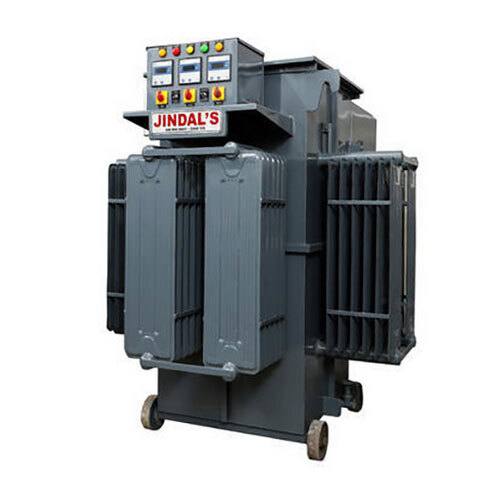
Being a reputed entity in this field, we have been engaged in offering Plating Rectifiers that is a significant piece of the electroplating cycle. This item requires the utilization of an electrical flow for keeping the covering material onto the metal part. It is answerable for changing over rotating current (AC) to coordinate current (DC). It is demanded in the market because of its superb functioning. Our clients can avail this Plating Rectifiers from us at a cost-effective price without any kind of delay.
Product details
| Voltage (V) | 100-500 |
| Current (Amps) | 150 |
| Phase | Three Phase |
| Color | Standard |
| Design | Standard |
High Performance and Safety FeaturesDesigned for robust industrial environments, our plating rectifiers feature modular architecture, with overload, over-temperature, and short-circuit indicators ensuring optimum safety. The IP55 enclosure protection shields internal components from dust and moisture, while compliance with IS/IEC standards guarantees quality performance. Users benefit from efficient operation and reduced maintenance due to superior component durability.
Flexible Customization and User-Friendly InterfaceWhether you require standard or customized dimensions, output current (from 100A up to 15,000A), or prefer grey or blue enclosures, our rectifiers accommodate diverse user needs. Analog and digital interfaces are available, and the rectifiers can be operated manually or automatically. This flexibility ensures streamlined integration into any plating or finishing process, making them suitable for exporters, manufacturers, and suppliers in India and beyond.
FAQ's of Plating Rectifiers:
Q: How does the integrated cooling system benefit plating rectifier performance?
A: The cooling system, available in air or oil-cooled designs, ensures the rectifier runs at optimal temperatures even during heavy-duty, continuous operation. This prolongs component life, reduces the risk of overheating, and enhances operational stability.
Q: What applications are these rectifiers suitable for?
A: These rectifiers are ideal for electroplating, anodizing, metal finishing, and various electrolysis processes, delivering precise voltage and current for consistent results across multiple industrial tasks.
Q: When should I choose a custom output current or voltage configuration?
A: Custom output configurations are valuable when your application or process demands specific current (from 100A to 15,000A) or voltage (0-12V DC, adjustable), ensuring your equipment precisely matches operational requirements for optimal process control.
Q: Where can the rectifiers be installed, and what are the mounting options?
A: These rectifiers are designed for floor mounting and can be installed in diverse industrial settings. With IP55 protection, they are suitable even in environments with moderate dust and moisture exposure.
Q: What is the process for monitoring and controlling the rectifier?
A: Operators can use either analog or digital meters on the integrated control panel. Automatic and manual operation modes, as well as overload, over-temperature, and short-circuit indicators, provide comprehensive control and real-time feedback.
Q: How do users benefit from the rectifier's modular and compliant design?
A: The modular structure allows easy maintenance and upgrades, while compliance with IS/IEC standards ensures safety and performance reliability. This translates to lower downtime and long-term cost efficiency for industrial users.